So much has rightfully been written and celebrated about the Hall of Fame career of Patrice Bergeron that, while preoccupied with other tasks, I’ve been a bit late to the party to chime in.
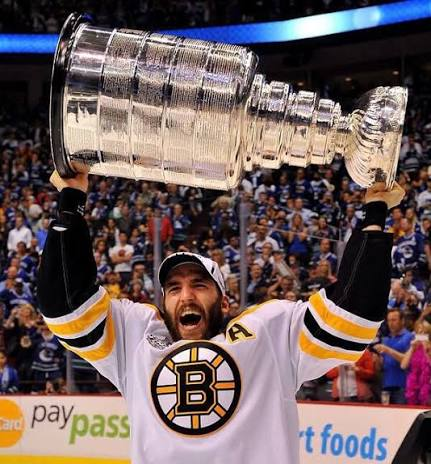
Bergeron’s No. 37 will be raised to the TD Garden rafters on Dec. 1 before a Tuesday night game against the Colorado Avalanche, the successor of the Quebec Nordiques, Bergeron’s team growing up in the 1990s in Quebec City.
Like Hall of Fame defenseman Raymond Bourque before him, Bergeron was a French Canadian hockey player drafted by the Boston Bruins. Bourque is from Montreal, so the relationship with the Montreal fans has always been a little more personal for him. But it is amazing that the Bruins have had two, modern-era, generational talents from French Canadian backgrounds.
The player Bergeron has been most compared to throughout his career is another French Canadian, Jean Ratelle, who played the final six seasons of his own two-decade, Hall of Fame career in Boston. And, like Bergeron in much more recent years, Ratelle was such a strong, two-way centerman for the Bruins over his final five, over-35 years in the NHL that a full career in Boston (rather than New York, where Ratty established his legacy as center of the famed GAG Line) would have elevated his legacy as a Bruin to a comparable level.
As it is for expansion-era NHL fans, the great Jean Beliveau set a standard of French Canadian excellence that Ratelle, Bourque and Bergeron would bring to Boston, each with his own brand of intensity, but at times reminding us of their own predecessors in delivering a rare combination of competitiveness, consistency and elegance, the kind that gets a hockey fan used to winning.
When special players come along or raise the bar in ways that hadn’t been considered, they create a wave of emulators and an uptick of interest from amateur scouts in players who follow in their footsteps.
Bergeron was not a spectacular prospect, more so a surprisingly veteran-like decision maker with adequate athletic ability. In the fall of 2003, Bruins management was compelled to keep the 18-year-old forward around an otherwise veteran club except for a rookie goaltender named Andrew Raycroft.
Things went so well for these two young players that NESN featured them driving a Zamboni over the old Charlestown Bridge. Raycroft won the Calder Trophy as 2003-04 NHL Rookie of the Year. Bergeron was among the contenders.
When the NHL went into a season-long lockout that summer, the league and the NHLPA made a deal that allowed young players such as Bergeron to play the 2004-05 season in the American Hockey League, and that’s where Bergeron moved into his center position for the first time as a professional. His adaptability allowed him to thrive as a right winger in a depth position as an 18-year-old NHL rookie, and at 19 he helped the Providence Bruins reach a Calder Cup conference final against a stacked Philadelphia team that would also produce members of future Stanley Cup teams, albeit the Bruins (Dennis Seidenberg), the Blackhawks (Patrick Sharp) and the Kings (Jeff Carter and Mike Richards), not the parent Flyers.
It was during many P-Bruins games that Rink Rap began to realize what Boston’s amateur scouts knew, that Bergeron brought a 35-year-old mind to the rink with his teenage knees.
We almost lost him:
Bergeron didn’t become a center in the NHL until the Joe Thornton blockbuster with San Jose. He and P-Bruins linemate Brad Boyes were joined after the trade by future Bruins Coach Marco Sturm, an underrated player in the team’s climb to the precipice of the 2011 Stanley Cup championship.
The roster mess that the Bruins had become out of the 2004-05 lockout obscured the fact that sound, post-Thornton hockey and the emergence of Tim Thomas as many seasons’ starting backup as the go-to goalie got the Mike Sullivan-coached Bruins to within two points of the playoffs approaching the 2006 Olympic break. But the return to action saw P.J. Axelsson wreck his knee in a collision with then-Carolina defenseman Aaron Ward, and the season trickled away from the Bruins.
The anticipated management change, the first executive firing in over 80 years of Bruins hockey, sent the team into a whirlwind of changes, and among the more underrated changes was behind the bench, where Dave Lewis wanted Bergeron, Boyes and Sturm to spread out over the rink to exploit the two-line pass (made legal in 2005-06), but the strategy resulted in a lack of the natural cohesion that the line had shown under Sullivan, and Bergeron posted one of the worst plus-minus ratings in the league as a result.
Enter Claude Julien, enter structure, enter an entirely new theory as to how to manage a speedier game with pucks pinging when not bouncing off synthetic sticks, and the right coach calmed Zdeno Chara’s game and gave Bergeron the right leader and a perfect platform to develop into hockey’s quintessential, 200-foot player.
Game 1 of the Julien era was a mess of a loss in Dallas, but after the Bruins won their second game of the season in Glendale, AZ (Phoenix’s Foxboro), Coyotes Coach Wayne Gretzky raved about Bergeron’s play.
One of the things recently unearthed about the Great One was his father Walter’s advice to follow Bobby Clarke, the Flyers’ captain in the 1970s, and learn how to play like him. Clarke’s sickle had a legacy of its own that complemented the Broad Street Bullies’ lineup that complemented his own two-way talent so effectively. But buried beneath the dynamics that made Philadelphia the most-hated team of the decade – if you’re too young, think Florida Panthers – was his immense talent and compete level.
If he hadn’t won the first of multiple Hart trophies as NHL MVP in 1973, Clarke would be among the game’s most underrated players ever. But the press liked him or at least respected his skills, especially as a diabetes survivor. This was the guy Gretzky used as his model, and so it resonated when he said in that postgame media scrum, “I don’t think you realize how good this guy (Bergeron) is.”
Gretzky is known for the scoring machine of the 1980s Edmonton Oilers and smashing the records that Phil Esposito had smashed a little over a decade earlier, but Gretzky’s two-way acumen and thoughtful approach to the game has barely been tapped. Anytime he sits on the TV panel and makes an observation, viewers should take note. Gretzky was publicly wowed by Bergeron just as the centerman was beginning his age-22 season.
That season nearly ended Bergeron’s career before it got started. Bergy had a move he would make to give a defenseman his back, fake one way and turn with the puck out the other. Philly defenseman Randy Jones ran right through one of those fakes, plastering Bergeron’s face against the hard dasher. It was still October, but the severe concussion canceled his entire season. It was painful to watch Bergeron meet the media to discuss his status shortly thereafter.
Bergeron rehabbed, got better, and seemed ready to rejoin his teammates for Game 7 of the Bruins’ first playoff series in four years. Hours before the Bruins and Canadiens would decide their 2008 opening-round series at the Bell Centre, Bergeron and backup goalie Manny Fernandez drilled on the ice. But the team held him out.
Perhaps because of too much summer training, Bergeron struggled once the 2008-09 season got going. His stride lacked pop, and in a Dec. 20 home game against Carolina, Bergeron tried to strip a puck-carrying Seidenberg (then with Carolina) at center ice and literally ran into the defenseman’s passing shoulder. Bergeron reeled on agony on the ice, left with some assistance, and put doubt in this mind as to whether we would ever see his potential, whatever that could have been.
But Bergeron came back and played better hockey later in the season. Perhaps the time away was the parentheses he needed to find his legs.
Since 2008, the scares were few and far between. As the Bruins were nearing completion of a four-game sweep over Philadelphia in the second round of Boston’s 2011 Cup run, Claude Giroux hit Bergeron late, causing him to sit out the first two games of the ensuing conference final against Tampa Bay.
Since then, there was the bloody mess his away sweater had become when he fought Evgeni Malkin in the 2013 playoffs and took a shot to the nose, of far greater impact the late hit by Michael Frolik in Game 4 of that 2013 Cup final that led to a chain reaction of debilitating injuries that sent Bergeron to the hospital during the next game in Chicago. There was also a side-to-side collision with Sidney Crosby that tore up Bergeron’s ear and threw a scare into the home crowd. Bergeron was injured but returned to play in the 2023 series against Florida that ended his (and David Krejci’s) career.
Hockey is hard, it’s unforgiving, and at the same time rewarding. I don’t think I’ve ever met a player who said he wishes he had never played, and I knew Travis Roy.
It’s great to see Bergeron so well recognized these days for his great career and his ongoing kindness off the ice.
In retirement, I wish he could put together a group of investors and key former players to bring the NHL back to Quebec City. They have the Videotron arena, and the uniform and branding is a no-brainer for anyone who doesn’t have to justify a pay-cheque. Unfortunately, the league remains trained exclusively on “non-traditional” markets. Bergeron, meanwhile, is trained on being a good dad while his wife pursues her professional goals.
Rather than relive or rank top-10 this or that, I’d rather try to describe hockey in a way that resonates for those who played hockey and followed Bergeron’s career.
Think of ice below your feet, a puck on your stick, the cool air breezing into your layers, and the wonderful feeling of acceleration through that air and on that ice, be it a hard, new sheet at your local rink or on the black glass of a frozen pond. The purest feels and thoughts in such a moment in time may be a distant memory or the next time out.
That adults of any age are likely to think of Patrice Bergeron at times like these means he left hockey in a better place than he found it.
When preparing for the entry draft, NHL management teams now have to vet many self-comparisons to Bergeron, whose influence can be seen in the play of extraordinary talents such as Montreal captain Nick Suzuki.
Vancouver native Fraser Minten wasn’t quite seven when Bergeron scored the Cup-winning goal against his Canucks, and it’s ironic that 15 years later Minten’s play is reminiscent of Bergeron’s. The Bruins certainly have noticed, and they prioritized a contract extension that will keep this kind of influence down the middle of their club for the next seven years after this one.
That’s what great players do, they make disciples and they affect coaching and training methods.
We’re fortunate here in Boston to have been blessed with generation after generation of talents whose influence far outreaches the box scores of the games we watched.

