The Pavel Zacha question won’t go away, and there are two ways to look at it: One is a problem, the other an opportunity.
It could be in this era of the National Hockey League’s sharply rising salary cap that the die is cast. Reports are circulating that the 29-year-old Boston Bruins center, whose $4.75 million-per-year contract expires after the season, seeks an extension that we can assume would at least rival David Pastrnak’s team-high $11.25 million salary.
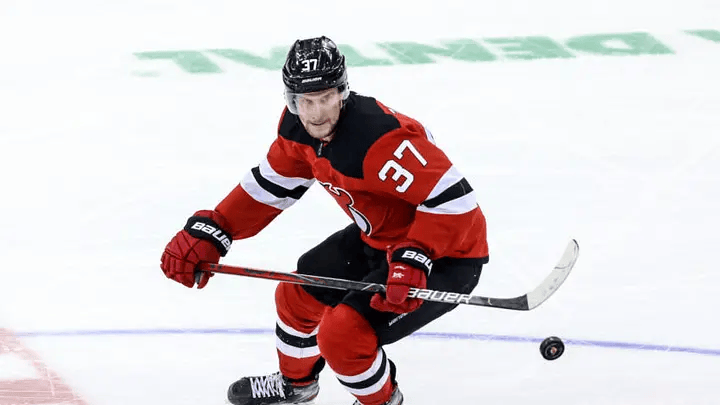
Pavel Zacha was chosen sixth overall in the 2015 NHL entry draft, and the six seasons he spent as a disappointment in New Jersey set the table for a clever intervention by Boston Bruins GM Don Sweeney.
The Bruins plight may play a role in Zacha’s fate, but only in the case of late-career, year-by-year player/team agreements, does this management bring back players who entered the final season of their contracts without extensions in place. A rare exception to recent history is defenseman Henri Jokiharju, who was extended (3 years x $3M) when other roster plans fell through on the eve of 2025 free agency. Despite playing a key role in helping his native Finland capture the 2026 World Championship, Jokiharju cleared waivers and is playing for the AHL Providence Bruins.
Despite his role as the consummate team player, the Bruins’ 3-zone, 200-foot conscience and the linchpin of their 5-on-5 game, it would appear Zacha falls more in the traditional line of core players in their prime years whom the Bruins wish to retain but only at a certain price.
Over his three-plus years in a Bruins uniform, Zacha has developed into the player management hoped it was getting in Elias Lindholm, whose nagging back problems have apparently altered internal expectations.
Team president Cam Neely’s legacy quote on the matter was a confession that, in his view, the Bruins lack a bonafide, top-line, No. 1 center. The Hall of Fame right winger added that there are not enough of these elite talents to go around the 32-franchise NHL and that it is very difficult to acquire one. What about a 34-team NHL? Entirely beside the point, but had Neely seen Zacha as a member of that class, he would not have indicated otherwise.
More recently, General Manager Don Sweeney chose not to stack Zacha against the league’s elites, saying he’s not into categorizing his players by the number. While popular responses assume Sweeney is avoiding such classifications so as not to weaken his negotiating position, it’s more likely he was sensitive lest he erode negotiations with his player. Moreover, it’s his job to provide the ingredients that can allow his coach to cook up a recipe for success of 20 players working together to produce a brand of hockey greater than the sum of their parts.
Sweeney is always seeking to improve his team wherever he can, with all individual moves carefully executed in the context of the whole. While a top-line, generational, elite centerman would be worth rethinking an entire roster construction, Sweeney will often frustrate reporters seeking interaction on foundational matters by announcing that he seeks to add to the team’s depth. One must remember that the management is more frustrated by losing than the most diehard fan. Ride the freight elevators with these guys, you can cut the tension with a knife. They just believe in what they’re doing, so it should come as no surprise when roster-changing opportunities are met without a goal to reinvent the wheel.
Where it concerns this player, no one understands Zacha’s abilities and limitations better than Sweeney, whose amateur and pro scouts were trained on the Czech forward since before the infamous 2015 entry draft. It’s a factoid that the Bruins tried (unsuccessfully) to trade up in that draft to acquire Norwood, Mass., native Noah Hanafin, setting the stage for a 13-14-15 string of first-round picks that, upon the free-agency departures of Jake DeBrusk and Andrew Peeke, left the Bruins with nothing.
Just remember that 2015 second-round pick Brandon Carlo netted the Bruins Fraser Minten and a first-round pick yet to be realized. I digress.
Regarding 2015, it is probable Zacha was also a player the Bruins tried to climb up the ladder so they could grab the 6-foot-4, left-shot forward, who foundered as the sixth-overall pick of the New Jersey Devils in that draft. In six full NHL seasons with the Devils, Zacha became a 17-minute player but topped out in the mid-30s in points and was a collective minus-66.
Sweeney knew there was more to give. Having signed journeyman center Erik Haula as a free agent in 2021 (David Krejci’s sabbatical year), he flipped the Swiss army-knife forward the next summer to the Devils for Zacha and provided the aspiring centerman with the mother of all, one-year apprenticeships. For 33 minutes a game in 2022-23, Zacha would spend his time either skating on David Krejci’s left wing or watching Patrice Bergeron play his shifts from the bench. Whatever could Zacha could glean from this doctoral internship would be pure gold.
Since taking over management of the Bruins from Peter Chiarelli in May 2015, Sweeney has spent a decade-plus scouring the world’s frozen ponds searching for an heir apparent to Krejci and Bergeron, the Bruins’ generational, 1-2 punch who finally said goodbye to the game of hockey after their bid for a victorious finish to the historic 2022-23 season crashed and burned amidst key injuries, up 3-1 in the best-of-seven but unable to finish the job against the emerging beast of the league, the Florida Panthers.
Like Wile E. Coyote sprinting off the edge of the proverbial cliff, the Bruins elevated Zacha and Charlie Coyle into top-six center roles for the 2023-24 centennial season, and the two punched above their weight, for most of the season keeping the club in the hunt for a second, consecutive Presidents Trophy. Having bowed out again to Florida, this time in the second round, the Bruins were nonetheless encouraged by what they had accomplished. Boston survived yet another seven-game cliffhanger against Toronto – concluded on a brilliant play in which Hampus Lindholm spotted Pastrnak and caught the unsuspecting Maple Leafs off guard with the touchdown pass that Pasta converted in overtime. The TD Garden crowd seemed as shocked by the winning play as the Leafs’ bench. The Bruins didn’t have Bergeron and Krejci anymore, but they still had Toronto’s number and that seemed like enough.
Zacha’s 2022-23 internship produced 21-36-57 stats and a plus-26. Coach Jim Montgomery would ask more of Zacha as a center in 2023-24, increasing his average time by two minutes into the 18s, then the 19s before a tactical mistake that factored in a coaching change.
In the fall of 2024 with Elias Lindholm aboard via free agency, Montgomery started Zacha on left wing. The Bruins struggled to control the 5v5 game. By the time Monty got Zacha back into the middle of the rink where his strong stride and 200-foot commitment calmed the game and restored two-way structure, the coach’s own lack of a contract extension had become a story.
At 8-9-3 in the standings and without an agreement, the Bruins pulled the plug and appointed longtime assistant (then serving as associate head coach) Joe Sacco as the interim head coach. Montgomery’s swift appointment in St. Louis sparked media speculation as to all that had transpired behind the curtain. Meanwhile, Sacco simplified the game for the Bruins, who were tracking (12-5-1) toward a return to the playoffs until the offense dried up at the end of the calendar year. A six-game losing streak and Charlie McAvoy’s injury in the 4 Nations tournament extinguished realistic playoff hopes for 2025.
The Bruins had already lost Hampus Lindholm to a shattered kneecap blocking a shot. Further eroding the defensive core was McAvoy’s shoulder surgery, subsequent infection and procedure that ultimately ended his season (all thanks to a post-whistle cheap shot by Finnish winger Joel Armia, then a member of the Montreal Canadiens playing in his home NHL arena). The 2024-25 Bruins were not quite out of the playoff running, but realistic hopes were already dashed when captain Brad Marchand’s contract impasse took center stage.
Marchand’s stunning trade to Florida highlighted a deadline selloff meant to restore draft capital and an emerging prospect pool, immediately yielding Minten and Marat Khusnutdinov and a collection of draft picks. In a flurry of moves only rivaled by what Sweeney did in dealing Milan Lucic and Dougie Hamilton upon becoming GM in 2015, the Bruins’ veteran core was suddenly re-constituted around Pastrnak, McAvoy, Hampus Lindholm, Jeremy Swayman, newcomers Elias Lindholm and Nikita Zadorov – and Zacha.
Zacha’s contract is the first crossroads for the Bruins with the post-2011 core.
The silver lining around the problem this would be if the Bruins were Stanley Cup contenders is that Zacha is not a production-dependent player who needs to score to have value at his position. While he posted a career-high 30 goals last season and has yet to score this season, his plight has not become a distraction to this point. It only becomes a problem if the scoring slump takes on a life of its own in the player’s head.
Zacha doesn’t seem the type, but should the slump continue it may not only impact the team’s fortunes, it could hasten management’s urgency to seek a solution. The last thing Sweeney has publicly said is that the Bruins want to extend Zacha and that the two sides continue to communicate in hopes of finding “a landing spot.”
From a hockey-mechanics standpoint, Zacha had consistent linemates last season with Viktor Arvidsson on his right and Casey Mittelstadt on his left. This arrangement, of course, was only after Sturm corrected the line several games into the season by moving Zacha back to the middle. Mittelstadt, the initial second-line center, found a niche at LW while and Arvidsson did the dirty work. Through four games this season, Mittelstadt (also in the final year of his contract) is also without a point. Morgan Geekie has an assist.
After totaling seven goals to capture their first two games, the Bruins have been held to a single goal in their last two and take a 2-2-0 record into tonight’s home game against the 3-1-0 Utah Mammoth (managed by old friend Bill Armstrong).
As an opportunity, Zacha is a player that the Bruins would love to keep his entire career because he is uncompromisingly committed to the team concept and athletically built to carry a heavy load toward that end. But the Bruins said goodbye to Coyle, and this time it may not take a teamwide plunge in the standings to see the bright side with Minten emerging as heir apparent in Zacha’s role. Neely even identified the 22-year-old center as part of the Bruins’ leadership group.
This could be a rare case in which moving a strong, two-way center whose 30-goal 2025-26 campaign will probably stand as his career high for a perennial 35-goal winger becomes the right play. If said winger has hard shoulders and the inclination to drive the net and run over defensemen in the mold of Tom Wilson, then the Bruins can justify risking life without Zacha. Stronger wall play would make everyone better including the defensemen trying to move pucks without passing them 100 feet into coverage. The Bruins can also find out if Matt Poitras can thrive and stay healthy as a top-niner in the NHL.
There is much that can happen on the Zacha front. Given Minten’s contract extension, encouraging signs from James Hagens and a prospect pipeline including Boston College junior center Dean Letourneau, a long-term commitment in an annual eight figures to Zacha as he approaches his thirties seems counterintuitive to the Bruins’ larger program.
Here’s the caveat: If you trade Zacha and get younger at center, your team takes an immediate hit. Traditionally, the Bruins wait and let the schedule unfurl so that, should they fall short of last season’s 100-point performance, then a trade becomes a simple decision. It says here that Zacha’s market value is too high to be appropriated as the Bruins’ “own rental” a la Jake DeBrusk. That also means the decision to trade or pay Zacha could be made sooner rather than later. A compelling offer could materialize ahead of the March 1, 2027, trade deadline. Was Zacha on the table for Kirill Marchenko as Pierre LeBrun’s report suggested? Who knows. It is reasonable to assume Sweeney is navigating this situation with an open mind.
Finally, trading Zacha now would give the Bruins more runway to address resultant challenges while in the playoff hunt.
As visionary of the Bruins for three decades, Harry Sinden was all about strength down the middle, and he saw fit to trade centermen of even generational status (Phil Esposito), starting with Fred Stanfield, the second-line center on the Bruins’ 1970 and ’72 championship teams. Stanfield went to Minnesota for Gilles Gilbert, the Bruins’ new starting goaltender. What enabled the deal was the leap made by center Gregg Sheppard from the AHL Braves to Boston’s top six.
Perhaps Poitras has more say in this outcome than anyone might realize.

