Brady Tkachuk to Florida for draft picks, and now that first-rounder the Panthers owe Boston in the Brad Marchand trade isn’t looking so juicy.
Aleksander Barkov and the Panthers are back, probably for at least a few more years, with or without Sergei Bobrovsky. Cue that annoying cat-growl sounder.
Of more immediate concern, can anyone on the Boston blue line besides Charlie McAvoy and Nikita Zadorov match up against a top six that will feature some combination of Barkov, Sam’s Bennett and Reinhart, the Tkachuk brothers Brady and Matthew, Carter Verhaeghe and Brad Marchand? That’s seven guys. Add Anton Lundell, Eetu Luonstarinen and Evan Rodrigues, and that’s 10 forwards who would be in the top nine on every other team in the National Hockey League.
If there’s a silver lining for the Atlantic Division, GM Bill Zito has to move out at least one of these contracts up front to bring back Bobrovsky. Moving Mackie Samoskevich is only a start.
Will Marco Sturm skate McAvoy and Zadorov minutes befitting Bobby Orr or Brad Park? No offense to Hampus Lindholm, a fine player and teammate, but if I’m Don Sweeney I’m putting him dead center in a package to get Darnell Nurse to Boston – stat.
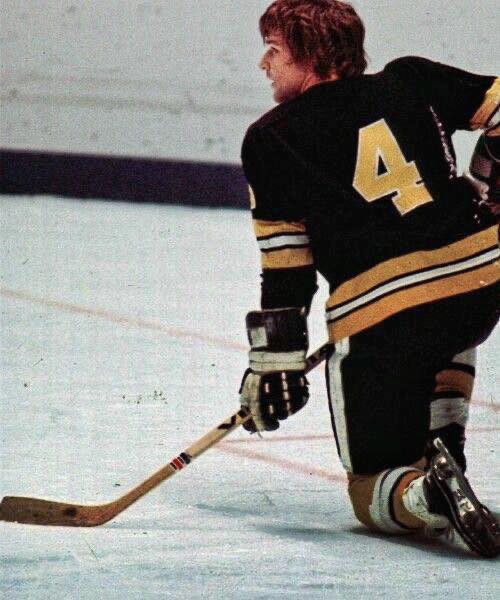
Gone are the days of the best in the business playing over
30 minutes, but the Bruins are going to wish it could be
done when the Florida Panthers visit TD Garden this fall.
I know it’s fashionable to frown on Nurse, but he was the primary shutdown defender on a team that made the 2024 and ’25 Stanley Cup final. 2025-26 was a bad season for a lot of Edmonton Oilers and predictably so after all the hockey they had played.
On the broader scale, who knew there would ever be a point in the life of a 1960s hockey fan when “Stanley Cup Champion Carolina Hurricanes” sounds just and right and when the two biggest moves of the offseason (so far) involve the I-75 intrastate Battle of Florida.
Welcome to NHL 2026.
It may feel right now like the trains are whizzing by the Bruins as they reach the dock, but they have more subtly become a trend setter.
The National Football League is the ultimate league for one-year turnarounds, your New England Patriots being the latest example. For many years now NFL teams have, on the heels of disastrous seasons, installed new coaching staffs, a half-new roster, filled a couple of critical holes on the line of scrimmage, signed a skill player and – presto – credibility restored.
It’s not as frequent in hockey, but the Bruins’ immediate turnaround from their 2025 plummet to the bottom of the Eastern Conference to 100 points in the standings and a playoff appearance serves notice that it can be done in the NHL as well. The Toronto Maple Leafs and New York Rangers are, of course, taking notes.
The Bruins’ accomplishment duly acknowledged, the next steps are more slippery and steep. It will be harder to climb off the playoff bubble back to the cusp of genuine Stanley Cup contention. In the coming 10 months, the Bruins could conceivably take important steps to further their long-view plan and, along the way, miss the 2027 playoffs. Sweeney’s overarching program is at a subtly critical point that one hopes won’t be influenced by frustration emanating from executive offices. A plan like this one requires patience, and rarely are the paths from bottom to top linear.
The good news is the Bruins are in no rush with their prospects, will not risk the long game with hasty decisions about young players, won’t make moves incongruent with the larger plan, and won’t forfeit the assets gained in March 2025 for gains that won’t translate forward in the long view. The offseason will bring a calculated approach, and most may find the summer of 2026 underwhelming.
There are two holes the Bruins have been trying to address, and one of those requires a 2026 intervention, whether the immediate solution be long or short term.
RIGHT DEFENSE
The definite No. 1 on the offseason to-do list is right defense.
Henri Jokiharju was not Plan A when July 1, 2025, approached. His extension (3 years, $3 million per) was not announced until the 11th hour, meaning the Bruins had another idea that failed to pan out.
Jokiharju did not adjust well to Sturm’s hybrid man-to-man, D-zone coverage, skating around rather than through picks set high in the attacking zone by opponents. Jokiharju wound up playing 41 games, injury accounting for only a small handful of the half season he watched from press level.
Mason Lohrei, a freshly extended left shot whose early-season struggles on the defensive side of the puck landed him in the press box for six straight games, became Sturm’s most-of-the-time, right-side solution.
Jonathan Aspirot, another left shot who, like Parker Wotherspoon before him, had been buried in the AHL and identified by Boston’s pro scouts, found his NHL stride with the Bruins and, more so than Wotherspoon, emerged as a successful, regular-season defense partner for McAvoy. Aspirot had predictable hiccups in the playoffs, but Sturm did not shorten his bench. The suspicion here is that the injuries with which Lindholm (ankle) and Zadorov (MCL) played prevented them from handling the extra minutes so otherwise common in the playoffs.
When the Bruins were in a 2-1 series hole and their breakout game against the Buffalo Sabres had become a minefield, Sturm chose talented left shot Jordan Harris, who had hardly played in the preceding weeks, to fill the right side. It did not go well, no fault of Harris. Looking for a reset in Game 5 at Buffalo, Harris and Lohrei sat, Jokiharju played, and the Bruins won, sending the series back to Boston for Game 6. Jokiharju played Game 6, not poorly, but the Bruins lost, and the season was over.
Jokiharju was a postseason all-star selection for World Champion Finland and should have trade value in a market bereft of B-level right-shot defensemen.
Andrew Peeke was 7th Player worthy over the first half, hit a bit of a wall but rebooted to a strong finish, setting himself up for free agency. The Bruins cannot solve their top-four problem and compete to keep Peeke in the third spot. That leaves McAvoy as the only trusted, right-shot defenseman.
This can cannot be kicked down the road.
Potential Solutions
Darren Raddysh, the right-shot defenseman who had the breakout season with Tampa Bay but could not fit under the Lightning’s cap, is already off the board, having been traded to and signed long term by Toronto.
Sweeney may yet be preparing a July 1 offer to Rasmus Andersson, who went to Vegas (instead of Boston) at the trade deadline and is reportedly headed to the open market.
Other prominent right shots that could interest the Bruins include John Carlson, well into the back nine after an entire career’s worth of hockey in Washington and one of the reasons the Anaheim Ducks eliminated Edmonton. Carlson, 36, showed he is still capable of 22-minute nights and would provide an instant upgrade to Boston’s powerplay.
The Bruins could go younger and deal with the Devils for the skilled 22-year-old Simon Nemec, who could develop his game as a Bruin and reach greater heights than what he’s experienced so far in New Jersey (see Pavel Zacha).
At one point last year, Filip Hronek reportedly declined to waive the no-move clause in his contract, but players can change their minds if they believe their team (Vancouver) will move on without consultation once those protections have expired (becomes a 15-team no-trade in 2028). Hronek might be the finest, career minus-78, two-way defenseman I’ve ever seen play, and the 28-year-old from Czechia most assuredly will be more statistically successful over the next six years of his career.
Finally, this idea is solely based on the frustration being expressed in Seattle and reports that the Kraken are looking to make a big move this summer: A hockey trade could be made that would bring former Florida nemesis Brandon Montour to Boston.
CENTER
Solving this positional quandry is more complex, but the belief here is that the Bruins are only cautiously kicking tires on Dylan Larkin and Mat Barzal, the two big-name centermen who could be on the move.
Larkin has requested a trade, reportedly expanded his go-to list, and therefore is the more realistic option. Reports suggest the Islanders could be looking to move on from Barzal. If that is true, remember that Sweeney reached back into the 2015 draft to bring Zacha (6th overall), AJ Greer (39th) and Wotherspoon to Boston. Barzal, of course, was the rallying cry of the torch-bearing mob after he went with the next pick after Boston had three consecutive at 13-14-15. At age 29, Barzal is at a crossroads with an Islanders team with a new GM, coach and franchise direction to set.
In Boston, the emergence of Fraser Minten as a linchpin center with open-ended upside, combined with veterans Zacha and Elias Lindholm, leaves no room down the middle for either Marat Khusnutdinov or Matt Poitras, much less James Hagens (likely to establish his NHL career as a winger a la Phil Kessel and Tyler Seguin).
The best yield of the Bruins’ March 2025 turnover: Minten is an untouchable in Rink Rap’s universe. Like the great Patrice Bergeron, whose 37 goes to the TD Garden rafters (date TBA) and who probably will be announced as a Hockey Hall of Famer come Monday, Minten is a rarity in that he has a 6-foot-2, 204-pound, 22-year-old body for hockey and a brain befitting a 37-year-old veteran. You don’t even listen on that player unless it’s Edmonton on the line and Connor McDavid is the subject.
I digress.
If the Bruins choose to move on from rather than extend Zacha as he enters the final year of his team-friendly contract, then it makes room for a more offensively productive playmaker in the middle.
Poitras, whose general maturity and detail-game improved substantially throughout his 2025-26 season almost exclusively spent in the AHL, is NHL ready and at a point where Bruins management is in a position to fish or cut bait. He and left defenseman Frederic Brunet ended their 2025-26 campaigns in AHL cap and gown. It’s time to integrate these guys.
When Sweeney meets the media on Wednesday, he will restate his annual goal of “adding to our depth,” but even the quieter offseason decisions could impact the top six, especially the second line of Zacha, impending UFA Viktor Arvidsson and Casey Mittelstadt, who like Zacha has a year remaining on his contract ($5.75 million AAV).
If there is action this summer, that’s where to look for it.
Right after the Bruins get their blue line in order.
 Rink Rap with Mick Colageo