So this is how Marco Sturm’s legacy as a Boston Bruin finally finds a proper place under the spotlight: via the meat grinder of the National Hockey League coaching life.
The road to the Stanley Cup is bumpy and difficult, and often times a player of great influence is left behind upon the precipice of a dream come true.
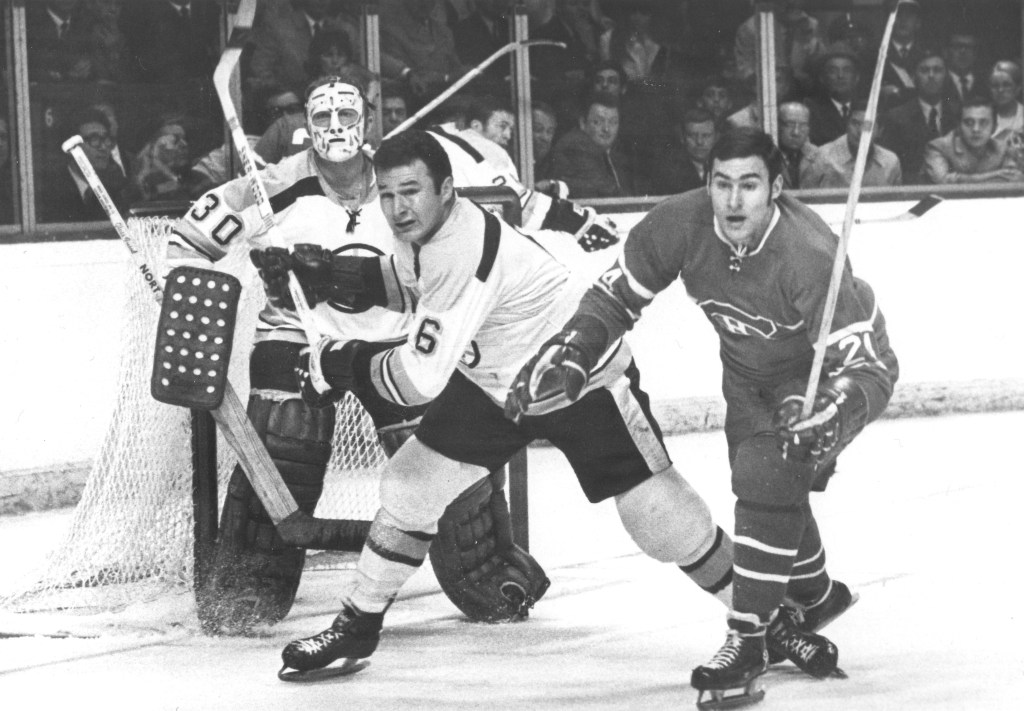
I think of the late Ted Green, the beast of a defenseman who for all intents and purposes was the original Big, Bad Bruin. A stick-swinging incident during a September 1969 preseason game against St. Louis winger Wayne Maki left Green with a dent in his skull and a career forever altered. He missed the Bruins’ run to the Cup in 1970, and though he returned the following fall wearing a helmet and was in uniform for the sequel championship in ’72, he was the fifth defenseman and felt jilted. He would join the WHA New England Whalers and a year later march a make-shift trophy around Boston Garden ice as the rival league’s inaugural winning captain. He would join Glen Sather’s coaching staff in Edmonton and find his home behind the bench of the greatest offensive machine in NHL history. But it never really happened for him in Boston, as it should have.
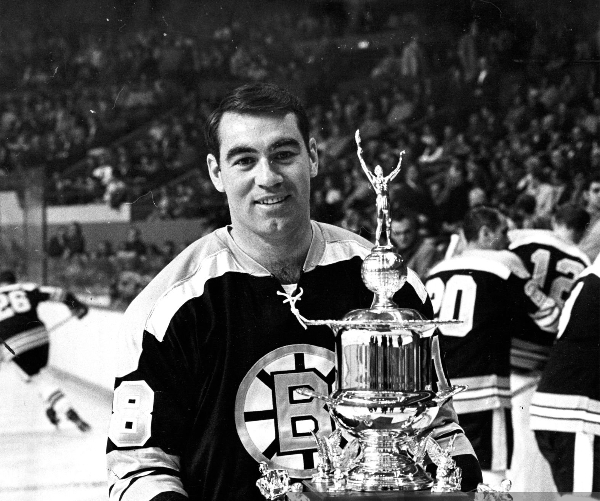
I think of “Steady Eddie” Westfall, a checking winger in Boston (who covered the right point when Bobby Orr pinched to intercept Larry Keenan’s clearing attempt and … well, if you’re reading this you’ve seen that highlight reel a few hundred times). Westfall left the Bruins when Green did, in his case unprotected for the NHL expansion draft that filled the rosters of the Atlanta Flames and New York Islanders. Westfall went to center and was Islanders captain until the group of star players emerged that would be at the core of a four-year Cup dynasty. Westfall retired in 1979 and, despite his Moses-like role guiding the franchise through the desert, did not cross over with them to the promised land.
So it is with Sturm, the German winger who came to Boston from San Jose in the Nov. 29, 2005, blockbuster trade for Joe Thornton. His arrival coincided with Patrice Bergeron’s shift from right wing to center after the trade, and together with Brad Boyes the three formed a dynamic top line for a team that, before the Olympic break, was only two points out of a playoff spot. Upon the NHL’s resumption, the Bruins lost in Raleigh to eventual champion Carolina, and in the game PJ Axelsson collided with Aaron Ward (then a Hurricane), wrecking the former’s knee. The Bruins went into a tailspin from there.
After the first management blowup in franchise history, Bergeron, Boyes and Sturm resumed their scoring production but became a plus/minus disaster when coach Dave Lewis (Peter Chiarelli’s band-aid hire) thought it best to spread them out all over the ice. It didn’t work. The Bruins, despite being newly constituted with free-agent signees Zdeno Chara and Marc Savard, were a mess in 2006-07, and they once again missed the playoffs.
It wasn’t until the following season that Chiarelli’s and Sturm’s Bruins came together under defensive-minded coach Claude Julien, and Bruins CEO Charlie Jacobs brought back retro-style sweaters that harkened back to the Big, Bad Bruins of the 1960s and early ’70s.
It was that 2007-08 season when the Bruins turned the corner.
All of the city’s attention was divided between the Patriots, Red Sox and most recently the Celtics (who had acquired Kevin Garnett and Ray Allen and were on their way that spring toward Banner 17), and rightfully so. It wasn’t right that the state house on Beacon Hill displayed a banner wishing the Celtics luck when the Bruins, a franchise that far predates the NBA team, was also in the playoffs. But the Bruins also realized that they had earned that ignorance, so yeah, they said what about us and that spawned an era of street-lamp posters acknowledging playoff season for any major-league, Boston-based team about to start a playoff season.
Whoop-de-doo, as Adam Sandler loves to include in almost every character he plays (Happy Gilmore 2 is coming out in July. I digress).
Though he has no ring as a player and his name was not hammered into the barrel of the Cup, Sturm made an indelible mark on the Bruins as they climbed from obscurity back to a place of honor in Boston sports.
He likely would have been a member of the Bruins’ championship squad that hoisted the Cup on June 15, 2011, in Vancouver, had it not been for a strange but catastrophic knee injury early in Game 1 of the fateful, 2010 second-round playoff series against the Philadelphia Flyers.
Prior to, Sturm scored the two biggest game-winning goals of the era that preceded the run to glory.
The first of those happened in the Bruins’ first playoff series since before the 2004-05 lockout season. Boston was facing elimination on home ice against the Montreal Canadiens, and Game 6 was tied 4-4 late in the third period when Sturm knocked Montreal defenseman Roman Hamrlik off the puck, turned out of the right-wing corner and shot – save Carey Price – then picked up his own rebound, calmly weaved around the chaos and put the Bruins ahead to stay.
Here’s what makes a GWG in a series the Bruins would lose Game 7 by a 5-0 score so special: The morning after being eliminated, the Bruins set their all-time, single-day franchise record for full season-ticket sales. After falling flat in a Game 7(!), something today’s radio talkers have proven they will never forgive.
Example: Opening night of the 2023-24 season, the Bruins opened their Centennial campaign with an extravagant, pregame, on-ice ceremony spotlighting descendants of the all-time greats of the franchise’s many glorious yesteryears. The next afternoon, the delinquents on the featured show of the team’s radio flagship thought it authentic of them to ridicule and mock the presentation as if they were Beavis and Butt-Head. It wasn’t funny. It was embarrassing, mostly for them but also for the Bruins at an important time. And this all because, at the height of their powers, they had the Florida Panthers by the scruff in the third period of Game 5 and managed to let the game and the series slip out of their grasp.
This is how it goes in Boston. You can scale Mount Everest and, if you’re 1 inch from the flagstick, and slide back down, you might as well have fallen flat at the very start like one of those skateboarding accidents on YouTube.
Welcome back to Boston, Marco Sturm.
His other indelible moment was missed by yours truly, who on Jan. 1, 2010, heeded the NHL’s instructions to vacate my press seat at Fenway Park midway through the third period (of a game the Bruins were losing 1-0 to the Flyers) and wait outside the Red Sox clubhouse to gain postgame access.
I passed by hundreds upon hundreds of deflated fans wearing their gold, Winter Classic sweaters trying to salvage the day by at least beating the crowd out of town, but the team that looked like it was trying to win 0-0 did something special and memorable.
The only other media people in the dingy, wet bowels of Fenway were ESPN teammates Steve Levy and Barry Melrose, watching a small, old-school monitor while trying not to stand in nearby puddles on the asphalt concourse.
The crowd screams above … BAWWWWWHHHH! … you gotta be kidding me. Levy and Melrose grin; the Bruins have tied the game late in the third period. I hazard a step or two in their direction but quickly realize, after not being there in the moment, there is no point in risking my spot. The teams go to overtime, and … BAWWWWWHHHH! … Sturm tips home the winning goal from Bergeron.
The media pour down behind me at the door to the clubhouse. I don’t budge, no matter how big-shotty or pretty they are. I am staking my place (expletive deleted), as with the door now open I can see Chara’s seat is the first one on the left. I hold my spot and wait as the horde pushes and shoves and slides beyond to other players.
Finally, Big Z takes his spot and tells us the Bruins rallied because they didn’t want the day to end without finding out what it wound sound like if they scored a goal in Fenway Park.
What a quote.
I somehow found it OK to miss both goals. As an eight-year-old, I had to pee when my favorite player, Tony Conigliaro, came to bat. My dad tried to discourage me, but I was convince this wasn’t Conig’s day. It was only while standing over the long ivory sink functioning as a group urinal that I heard the right-field Grandstand rumble above me. By the time I reached the exit, he was back in the dugout. Home run.
Standing outside the Sox clubhouse when Sturm won the 2010 Winter Classic made this moment from 1965 funnier than it already was. I feel like my whole life has been some sort of attempt to make up for that miss. That includes sleeping out for Bruins tickets to Game 5 of the 1972 Cup final, which the Bruins led 2-0 only to let slip away on a weird Bobby Rousseau goal when a pass caromed off a Boston skate and in behind the otherwise spectacular Eddie Johnston. (The Bruins won the Cup two nights later at Madison Square Garden, and I got to see it live on TV.
Make that four (4!) times the Boston Bruins have passed on Peter Laviolette. The erstwhile Rangers coach (replaced by Mike Sullivan this offseason) had been available and wanted the job on three prior occasions, going back to Harry Sinden’s final act as general manager in October 2000 when he fired Pat Burns after an 0-4 western road trip and replaced him with Mike Keenan.
Laviolette, who had coached the Providence Bruins to the Calder Cup championship in 1999, came within a Game 7 overtime goal of a second consecutive trip to the AHL final (and sure title repeat). He was promoted in 2000 to assist Burns in Boston, and he held a meaningful role with delegated duties for those eight games before Sinden made the change.
“I wanted Keenan,” was the legacy quote. Sinden felt his post-Bourque Bruins looked lifeless, so that’s what he did before things got too far out of control. He then promptly announced his retirement from the job he had held as Bruins GM since returning to hockey in 1972 to navigate the Bruins through the competition of the WHA and NHL expansions. Mike O’Connell was the new GM, only he was saddled with Sinden’s choice of coach. Under Keenan, Laviolette was reduced to pro scout before games and puck fetcher during practice.
The 2000-01 season wasn’t good for any of the stakeholders, and it ended with Bourque bringing the Cup back to Boston at the bequest of Mayor Tom Menino. Ouch.
O’Connell had already been building a bigger, beefier roster that initial season, and when it came time to get his own coach for 2001-02, he chose Robbie Ftorek on the basis of his vast experience.
That day, Islander GM Mike Milbury called Laviolette, and the Franklin native was a head coach in the NHL for the first time. Reinvented with Alexei Yashin and Michael Peca down the middle, Laviolette’s Islanders broke a six-year playoff drought, but after failing to beat Toronto in the opening round for a second straight year, Milbury dropped the axe.
So when O’Connell needed a new coach for 2003-04, Laviolette had two years of NHL head-coaching experience, but it was a different kind of experience that influenced O’Connell’s choice of Mike Sullivan. Up close and personal, that’s how O’Connell was won over by Sullivan, whom he promoted to Boston under duress, having fired Ftorek with nine games remaining in the 2002-03 season following the urge of malcontent players. Sullivan so impressed O’Connell, who was acting as head coach, with his management of the Boston bench, that it was decided. Sullivan was the next coach of the Bruins.
That was the third time. This is the fourth, and though it comes at the long end of Laviolette’s storied career as an all-time great behind the bench, it remains significant here for two reasons, the necessary one being the history between Laviolette, his current availability – will Dallas call in the wake of the Jake Oettinger debacle? – and the Bruins upon coaching hires.
The other reason is personal. Full disclosure: Peter married my cousin’s daughter Kristen back in the ’90s, so he’s been part of my extended family for a long time. We don’t talk hockey much when we see each other. We try to keep our interactions family focused. I don’t know where the bodies are buried, nor at the long end of my own career in journalism do I care to know it all. I’m curious like any hockey fan, but I care way more about the relationships I have with my family family and my hockey family.
I don’t mind sharing opinions, so I write sparingly about Laviolette. This brief recap of his coaching history with the Bruins is an exception.
Marco Sturm will meet the Bruins media on Tuesday in Boston.
A quick word for anyone who might assume that the Bruins hired him the way former players have been hired by NHL teams over the years, letting their playing careers suffice as 90% of the interview process: Sturm’s resume is as legitimate as any other candidate’s lacking head-coaching experience in the NHL. He earned this opportunity. His sensitivities to the Boston sports market via his experience as a legacy Bruin (2005-10) will help him read the room when it comes time to speak publicly.
What happens to the trajectory of the Boston Bruins over the next three years will have more to do with the roster than the coach, but this is a solid hire.
Of great interest in the coming days is what happens now in the coaching careers of Joe Sacco, Jay Leach and Ryan Mougenel?
A former NHL head coach with Colorado, Sacco was an assistant to Julien and Bruce Cassidy, an associate head coach to Jim Montgomery and most recently interim head coach. While his great value to the Bruins could theoretically continue with Sturm in charge, Sacco is at a career crossroads, so what he decides vis-a-vis other NHL teams’ incomplete coaching staffs is compelling.
Same for Jay Leach, who was groomed in Providence for this day before leaving the Bruins for an assistant-coaching job with expansion Seattle before returning to Boston. If not now, why? And, if not now, when? What will Leach decide? Back to an AHL bench?
Had Leach been promoted, it seems more likely that this would have been an appropriate time to promote Mougenel, the current Providence Bruins head coach, to an assistant’s role in Boston.
It seems, given this twist in the plot, that some key cogs in the Bruins’ support staff, all have decisions on their hands before the 2024-25 NHL season reaches its completion.
The Bruins took their time hiring a new head coach for 2025-26, but the offseason is young.
 Rink Rap with Mick Colageo